CLARKE and the Push to Recognize On-the-Job Learning
Download MP3Attention: This is a machine-generated transcript. As such, there may be spelling, grammar, and accuracy errors throughout. Thank you for your understanding!
Chris Jenkins: [00:00:00] Cpe doesn't measure competence, it measures the activity of learning. If that's what we're going to measure, let's find the best ways to measure that so that we can tell that an individual is going forward.
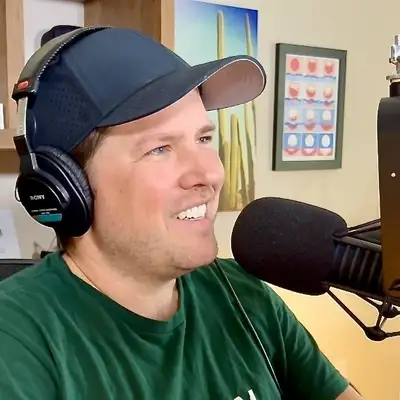
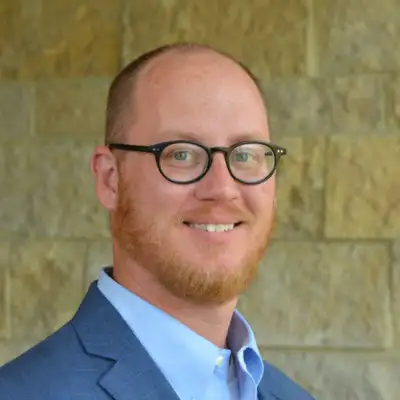
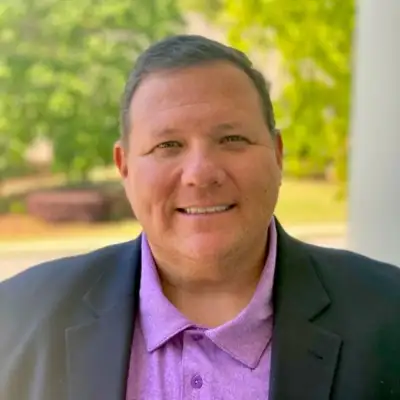
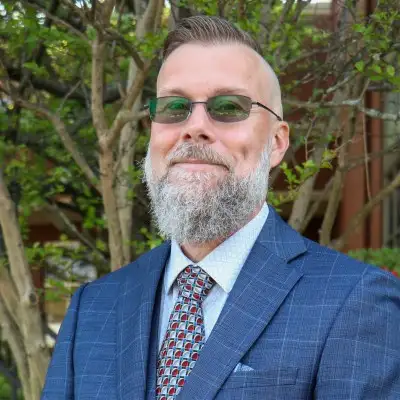
Blake Oliver, CPA: [00:00:14] Are you an accountant with a continuing education requirement? You can earn free Nasba approved CPE for listening to this episode, just visit earmark.app in your web browser, take a short quiz and get your certificate. Quick question how many CPE credits did you earn last week? For most of you, the answer is zero. But think about what you actually did last week. Maybe you spent three hours figuring out how the one big, beautiful bill hits a client. You read the statute, argued with an AI about it, check the sources, and walked away knowing something you didn't know on Monday. That was learning. But none of it counted for CPA. Society leaders think that should change, and they've built something to try. It's called Clark, which stands for Captured Learning and Reasoning Knowledge Engine. Today is the first time all four of them have sat down together to talk about it. I'm Blake Oliver, welcome to the Earmark podcast. In late August, four state CPA societies announced a new company called Five Storm Systems. The four are Florida, Georgia, Montana and South Carolina. Its first product is Clark, an AI powered system that documents professional learning as it happens during real work. It organizes that evidence so employers, organizations, and eventually regulators can review it. The people who built it are with me today. We've got Shelly Weir, president and CEO of the Florida Institute of CPAs. Boyd Search, president and CEO of the Georgia Society of CPAs. Allen Lloyd, executive director of the Montana Society of CPAs, and Chris Jenkins, CEO of the South Carolina Association of CPAs. These are the people whose organizations deliver a huge share of the CPE this profession takes. They're here to talk about what learning could look like when it isn't tied to a seat. Welcome, everyone. Let's go around quickly. 1 or 2 sentences each. Who you are and how long you've been doing this. Shelly, start us off.
Shelly Weir: [00:02:10] Thanks for having me, Blake. I'm Shelly. We're. I'm the president and CEO of the Florida Institute of CPAs. I have been blessed to be in this role for a little over five years.
Blake Oliver, CPA: [00:02:20] Welcome, Shelly; Boyd, how's it going?
Boyd Search: [00:02:23] Well, thanks for having us. Uh, I'm husband to Kristen, father of three daughters, and I've worked for the profession in two different state societies for almost 29 years.
Blake Oliver, CPA: [00:02:33] Welcome, Boyd Allen. Great to have you here.
Allen Lloyd: [00:02:36] Thanks. Uh, Allen Lloyd, executive director of the Montana Society of CPAs, uh, also a mountain biker dad, uh, not personally a CPA, but I am married to one, uh, have been in the accounting profession for 22 years, uh, most of that in state societies, but some of it also is a firm administrator.
Blake Oliver, CPA: [00:02:54] Being married to a CPA, you are doing the real work. Thank you. And Chris. Great to have you also.
Chris Jenkins: [00:03:01] So I'm Chris Jenkins, I'm the CEO of the South Carolina Association of CPAs. Been there for about 12 years. Before that, I was in Ohio for about 18 years as chief propeller head or the chief technology strategist. And I ride Harleys a lot. I'd like to go across country, and I really just like to start trouble.
Blake Oliver, CPA: [00:03:22] Well, I guess that leads us into my first question, which is how did this start? Three of you have worked together in the past. Take us back to the conversation where this idea first came up.
Boyd Search: [00:03:34] Yeah. So Chris and Allen and I have have a history, obviously a long history with each other goes back to Ohio. And, and we have made a, a very real habit of getting together to talk about our lives, talk about work, um, away from everything. Right. And if we go back to last fall, Um, we were together in Colorado and, and we were just having conversations about what we think we're doing, right? What we think we're doing wrong, what are we missing? And it, it kind of started with this question of, are we, um, in our roles and through our organizations, are we keeping pace with the profession? Um, and the reality is the practice of being a CPA, whether you're in public accounting industry or some other avenue, right? Um, is so much more research driven than it, than it has been in the past. It always has been, but the breadth and depth of knowledge required to do the work is, is volumes more than it was ten, 20, and 30 years ago. And so we started kind of realizing that we probably, particularly within the CPE framework, haven't kept up with how the profession's actually weren't working and how it's learning and how it's growing. And so we started with this idea of, are there A technology solutions that can sort of bring these things together. Uh, how someone's working and how they're learning and modernize it.
Blake Oliver, CPA: [00:05:02] So you three work together. You're talking about this, um, Shelly, how did you get involved?
Shelly Weir: [00:05:09] I got a phone call from from Boyd and Chris and Allen in the fall and saying, hey, we're we're chewing on something. We're thinking about something and want to get your take on it because I don't want to speak for them, but kind of respect your voice and the profession and, um, and what your thoughts might be. And as they started sharing with me some of the bare bones of, of the idea. I got super excited because Blake, as you and I have talked about before, I am all about doing targeted modernization. And I feel like we as a profession have done a good job recently of Self-reflecting and looking to where we can evolve with the times. And this is yet another one of those moments. So I got really excited to get involved and just grateful for the opportunity to work with these guys every day.
Blake Oliver, CPA: [00:05:55] What is the where did the name Five Storm come from? Chris was that you? Allen? Who? What is it? What is it? What? What is it?
Chris Jenkins: [00:06:06] We're going to we're going to pass that to Boyd.
Boyd Search: [00:06:08] Well, I don't know that I have the answer, but I mean, the naming journey on this thing was, uh, kind of a it was a it was a journey. It was a long journey, if you will. And we had a lot of laughs with it and a lot of fun. And, uh, the reality is Chris had a, a company that, uh, was a different name, but it had the term storm in it. And, uh, we just started playing with that. And I think actually Shelly was the one that sort of, uh, hit on, hit on this notion. And, uh, the number five does mean something, but we can, we can reveal that at another time, I guess. And, uh, it just a confluence of events and things and discussions. Yeah.
Blake Oliver, CPA: [00:06:48] All right. So we already talked a little bit about this problem with, uh, you know, traditional continuing professional education. Walk me through like a real day in the life of a CPA doing CPE. Right? Maybe, like I said at the beginning, I'm working out some new legislation, one big, beautiful bill, how it impacts all my clients. I'm reading the statutes, working through questions, and I would be doing this with like Claude these days, some sort of AI tool, right? I'm loading in the the legislation, the actual text, and I'm querying it and asking all these questions. Or maybe I'm using like some special, uh, tax research, AI product, that sort of thing. You know, how does that fit in with traditional CPE? Does, you know, can any of that count today?
Shelly Weir: [00:07:38] Shelly so the short answer is no. Right now our system is built upon seat time calculation, right? All of the learning that you just described is happening every day on the job. But the way that our current CPE infrastructure is built is to measure seat time. And so in that scenario that you just described, Blake, the CPA would be learning on the job every day at their desk, and then they would need to separately log in for our particular CPE course or go to an in-person event or whatever the case may be from a compliance perspective. And so we feel like that's an opportunity to modernize where we strongly believe that the desk of a CPA might be one of the most important classrooms in the profession. And all of that activity that you just described is exactly the type of activity that prompted us to start asking these questions. And so what we're doing that we'll get into today is we're building technology that recognizes what happens there at the CPA desk. We're almost prioritizing that, that on the job learning that's happening. Because if you think about it, CPA's every day are encountering something new on behalf of their clients. They're researching authoritative information. They're evaluating it on behalf of their clients, and they're applying it on behalf of dozens and hundreds and thousands of different small business clients and governments and schools that they might be working with to serve as their business advisor. And that's very meaningful. Professional learning. And so the question that we are exploring is not whether or not that activity that you just described, Blake, is learning. We're asking whether or not we can capture that in a meaningful way and with meaningful evidence of it in a structured way, because we feel that it very much is learning that the desk of the CPA is the most important place where learning transpires. So how can we capture it in an evidentiary way, which we'll get into?
Blake Oliver, CPA: [00:09:38] So when we talked about this a bit before Uh, this, uh, recording session you mentioned. I think, uh, you all talked about how other professions do this differently. Medicine in particular, um, when you were getting together and talking about this and looking at what other professions do, what did you find out about how they do, uh, on the job learning or this, this type of like, I don't know what you call it, like applied learning, not, not singing in a classroom, but I'm actually learning as I'm researching myself or doing something myself.
Shelly Weir: [00:10:14] Absolutely. Well, what we found was other licensed professions have developed different approaches to documenting professional learning. Um, medicine is, is a great example of that. So the broader point for us wasn't that accounting needs to copy medicine or another profession. It's that there are in fact, different documented ways that are working in these other professions to think about professional learning beyond simply sitting through a prescribed educational experience. And so that's again, what prompted this, this broader question of what could a modern technology enabled approach look like for CPAs, especially given that we know there are different documented approaches out there and other respected licensed fields?
Blake Oliver, CPA: [00:11:02] Okay. So like, like paint a picture for me, like, what are they? What are they doing? Like, I know that my dentist, like, uh, goes and does like continuing education in like a lab setting, right? And we'll actually like, uh, get to like work on something in a, it's like a classroom environment, but they've got all the tools and they're learning like a new procedure or something. And that counts, right? But I've never seen anything like that, you know, in accounting as far as I know. Yeah.
Shelly Weir: [00:11:28] Well, it's happening. It's just not being documented in an evidentiary way. And Chris will touch on what our thoughts are with that. But medicine is a good example. When you go to and God willing, you won't have to go anytime soon, Blake, but you go to the emergency room and you're being treated by a doctor, you can see that they're actually over in the corner and they're on their computer documenting almost like a write up of what they're doing for you. And they have tools in place to capture all of that from a continuing education perspective, to make sure it's counting towards their, their compliance requirement.
Blake Oliver, CPA: [00:11:59] Okay, so let's talk about what, what Clark actually is, right? That's the this is the solution. This is the technology that's going to enable this type of learning. Um, Allen, can you, uh, can you like walk us through like what it looks like? Like, I mean, I've never seen it. I've heard about it now, like paint a picture for me.
Allen Lloyd: [00:12:19] Yeah. So ideally, the, the person that's using it, hopefully they're not noticing that they're using it, uh, very much because it will be integrated with other tools. And so if you're already working with a tax research software, this is something we would hope to plug into it. If you're not using one of those yet, are, you know, the client will be very similar to other tools where you're interacting with it in that way. But what it's doing is it's capturing that learning when it happens. And so you're, you know, doing your day to day work. You encounter a novel business issue. You need to figure out how to, to navigate that. You know, what our software is doing is it's indexing that, that, you know, exchange so that we can then go back and report on what, you know, resources you were working with. And then, you know, how you came to your conclusion and what, you know, the business process was. The way I like to think of it is when I was a firm administrator, our, um, our research was just spiral bound notebooks, right? We had a room full of these things every month. You got new pages, you swapped them out and, you know, there were constantly people in there learning things, but at the time, there was no way to capture that. Right? We can't give credit because you were just in a room with learning today. We've got AI that can help us track these interactions with the research tool so that we can verify that there's actually learning happening there. I don't know if Chris wants to add more.
Chris Jenkins: [00:13:48] I mean, at the end of the day, you've got to look at learning today and what that that actually is. And if you break it down into components, there's an expert, that expert has specialized knowledge and they use tools, whether those be standards, technical documents or whatever. So the learning journey always starts from an authoritative source. And then from there information is conveyed in some way. And at the end of that, whether that's seat time or through an exam or some other form, we turn that into a learning record. So the entire process of CPE has been about how we document that someone learns. This is really no different. We want to start off with a known good source. Allow a person to work in a frictionless fashion, complete a task and at the end of that have a record of what occurred so that it can be then evaluated and verified for credit. And so if you just look at what's happening today and you apply the overlay of how technology has changed, it's not like it's a revolution. It's just an evolution that is allowing for you to get credit for what you're learning as it occurs on your machine in real time. And it's doing the exact same thing because we have no good sources to build the context for that query.
Blake Oliver, CPA: [00:15:15] So is this some like application? That's like sitting on my computer watching everything I'm doing because I don't know that that sounds a little big brother. I don't know if I'd sign up for that.
Chris Jenkins: [00:15:27] So I'm going to be honest with you. You can look at it in several different ways. Um, no, it's not an application that's sitting out there. And I'm going to use one of those words that you're going to make fun of me when, when this actually goes live. Um, it's a headless set of services. That's what it is. So there's no UI, there's no graphical interface. Um, but there are independent components. So as you work with your AI, for example, if there is a known good source in the system, it takes your query, repackages it with additional context and then goes to the tool of your choice. What we're tracking at that point are what are the, the, what are the tools or the known good documents that we're actually using? So that's the audit trail. We've gone and pulled these for context. And then you get your answer. Now at the end of this process, what you have is a bunch of very fractional learning records that say Blake was trying to research about state tax. We return state tax for this, this state. This is the paragraph within the statutes that we used for that. So the fraction is you're doing research on state tax. We pulled records from this part of a specific document that can be edited back and that gets stored. You're going to continue your learning journey. And with every one of those turns we create more fractions. So we're not ever saving your full conversation.
Chris Jenkins: [00:16:56] You still have the ability to upload your client documents with full confidentiality. We're just tracking fractional aspects of what you're doing, which creates over time, as you can imagine, a view of your learning activity. Now this is really fun because if you think about this and I'm going to go off the rails and everybody in the room is terrified, I'm going to do this. So this is awesome for me right now, if you're using a tool like clod or you're using a tool like ChatGPT, you have the opportunity to save your computer history, you could choose to integrate that into the tool if you wanted to. At some point, we're not doing that yet. I think the piece that Allen really pushed on, and I think was right to do, is not every record or every fractional record that we create necessarily turns into something that's available for credit. You, as the user, have access to all of your fractional records, and you can choose the themes that you want to tie together and then report on. So we're going to leave the control where it belongs with the user. Um, a lot of CPAs today will take 60 hours of CPE in a year. They don't report all 60 hours because they don't have to. Just like with any other learning, you as the user will get to choose what actually gets converted into credit.
Blake Oliver, CPA: [00:18:22] So, um, a big change that has happened is, well, Let me put it this way. We've got kind of two groups of accountants now using AI products for research and learning. And the first bucket is the folks like me who are experimenting heavily with off the shelf AI tools like Claude and ChatGPT. Um, then there's a second bucket of folks who are using specialized research tools like Thomson Reuters and Wolters Kluwer are developing, right? These, these, um, basic and very similar to Claude and ChatGPT, but they have the differences. They have access to specialized research libraries. You know, that authoritative content that you're talking about, I think. And so I'm wondering how this would work with that, right? If I'm doing research and say a Thomson Reuters, you know, co-counsel, um, like how do I get credit for that with Clark? Or how does Clark build my, uh, my learning, uh, record, that sort of thing? Like, or am I doing all of this research in Clark and Clark is providing me with the authoritative sources like, do you have that library of of expertise? Like I'm, I'm a little bit confused.
Chris Jenkins: [00:19:36] This and this is probably one of the most confusing parts of all of this. And I'm not going to get too far in the weeds with it. Clark was designed to be AI agnostic. So we don't want to lock any CPA into any tool. And it's the reason it's part of the reason that there's the five in the name, and we don't go into each one of the components, but the system has its own ability to store knowledge packs that can be stored by pretty much anybody. You could, as a firm, create your own knowledge packs if you wanted to. But we didn't want to tie any CPA into any specific product because we want the freedom of choice. I'm a big believer in hub and spoke. So what happens with those tools is because this is an API framework, those tools themselves can either layer on top of our knowledge packs, or they can license into this and actually build credit reasoning into their systems themselves. And it allows for the CPA to use whatever tool is best for the job at that time, because there are a lot of firms that are using two, three, four different AI systems because the CPA profession is complex and there's a lot of different offerings.
Chris Jenkins: [00:20:51] I didn't want to build anything that was going to be so tied to one system that, number one, we had to lock people in. And number two, we didn't get to take advantage of all of the cool advantages and the changes that are occurring. We started this back before GPT four. So look at just how much has changed in the year and a half since we started. The goal from the inception was we're not building an AI tool. We're building a framework that will work with AI tools and vetted known good knowledge so that the entire environment is bring your own tools. We're going to figure out the credit side. And I think when you look at what state associations do, our job has been historically to create the tools necessary for CPAs to capture the evidence of learning, whether that's a certificate or an exam. We're doing the same job, but we're not going to create software that's going to do accounting work. That's not what we do. So in this aspect, I worked really hard to limit the AI that we have to depend on to create a framework around it that the AI can actually utilize to make themselves stronger.
Blake Oliver, CPA: [00:22:09] Okay, so I get to use whatever AI tool I want. If that tool plugs into Clark. Clark can then monitor what I'm doing, see what I'm doing. But. And create learning records or evidence of learning in a, in a way that doesn't pull in that like confidential client information. Right. It's like you said, it's, it's just pulling in the evidence of learning, but without like, how do you, how do you handle that? Like the security aspect, right? Because that's what everyone's really concerned about is feeding in like client data into AI systems. Like this is another AI system, right?
Chris Jenkins: [00:22:47] Right. And so I think that you're going to pull me into this whole Propellerhead thing that I, that I try to overcome because this is what I do. Every AI system in one way or another has connectors, whether those be MCP, whether they're agents. Um, so imagine Clark is just another agent that has an access to a library. So Clark's going to intercept your query and say this query. We're going to look at Clark. Do we have any known good sources? And if we do pull those by the paragraph and the actual document number and add that context to your query. So I'm going to I'm going to spin this a little bit. And I'm going to answer your question. And if I don't answer it, you can you can come back at me. What I find with working with CPAs, especially those who are trying in AI, oftentimes they don't understand the level of context necessary to get a consistent, accurate answer. So you work with a lot. I work with AI a lot, and I like to start my presentations with how many people have worked with AI and gotten a result that you just can't use completely unexpected and just go, it doesn't work. The reality is, what Clark does is takes that initial query, adds context, engineers it, and doesn't store anything. It then passes it back through the AI system. So what Clark sees is your question. And it goes in queries and builds context. And then that goes to the AI. But when it builds that context about your question, it's saying, okay, we're we're accessing these documents for this type of query. So it's encrypted the entire the entire way. And we never store your original input in any way. We're cataloging what the theme of your question was and the documents that are returned that build the context for your answer.
Blake Oliver, CPA: [00:24:51] It sounds amazing. It sounds like the dream not having to sit in a webinar and click a polling question. You know that like I'm not paying attention to on another screen while I do my email, right? Like this is actually getting credit for real learning that I'm doing. Um, I gotta ask, why would CPA societies build this? Like you all? Uh, well, I don't know, actually, if all of you do it, but like, my experience is that CPA societies are the biggest CPE providers in the country. Some of them. Why would you build something that like would basically demolish that, that, that business?
Shelly Weir: [00:25:31] I think if we're serious about the future of the profession, we can't define our role, Blake, as protecting any one delivery model. So we very much view this as additive and an and and not an or. I keep using the example. We all are back in the 1990s when the internet came out. Before that, we all went to in person CPE. And at some point we had to evolve because the marketplace demanded it. And we started offering various formats of online learning for CPE. Now we're in an era of artificial intelligence and we have to evolve again. So we as state societies Shouldn't and couldn't be protecting just one delivery model. And if you think about Florida in particular, Blake, the free market answer is not fewer choices, it's more choices. So we're trying to give CPAs and employers another way to demonstrate meaningful learning. And if technology can help us get there and it can help us create another legitimate way to capture the learning that's happening on the job. We think the profession has a responsibility to explore it. So my, my bottom line answer is, if we wanted to preserve the status quo, we wouldn't be building Clark and Blake.
Boyd Search: [00:26:54] I'll add to that. If anybody that works in the association world, particularly 501 C6S, um, they know they're going to come into conflict at some point if they're doing their job right with the group that they represent and what's best in, in the interest of that group or profession, or whatever it might be, will contradict what's best for the business of the association. Right. And, uh, our job isn't to promulgate the business of the association. It's to advance the causes of the profession, um, in the best interest of the profession and the public trust, and then navigate the impact on the business. Um, not the other way around. And if we, I think all four of us feel very strongly about that component of what our job is.
Allen Lloyd: [00:27:42] I think I'd, I'd add, like the thing we hear most from our members is that they just don't have time to, to get everything done. And so this, like I, as we were talking about this, this is something that gives members time back. You know, they're already doing this. So if we can find a way to capture it, then that reduces a time suck that they have in another area.
Blake Oliver, CPA: [00:28:04] Okay, so this sounds like, um, I mean, I know the CPE standards really well because at earmark we we provide many of those delivery methods. And I also know that CPE standards do not update very often. We are talking years, not months to change, and they don't often change much. So the synthesis of what I'm saying, the summary, is that the National Association of State Boards of Accountancy is the regulator that creates the CPE standards. Um, and they don't move fast. And this sounds like a totally different dimension from where we are now with CPE. So it's a great idea, but how does it actually get implemented? How does how does this get into the CPE standards document in a way that like the, the, you know, the regulators are going to be happy and comfortable when everything they've done up to now has been time based. And this is this is not. It sounds like.
Shelly Weir: [00:29:14] Blake, this is exactly why we formed an advisory council to help us. So we've got regulators, educators, legislators, as well as firm learning and development professionals on advisory council to counsel. Sorry to help us make decisions on the continued product development early versus later in simple firm. We didn't want to create modernization in a vacuum. So we don't want to build around the regulators. All of the decisions that Clark will output. All of those decisions remain external, both for how the user decides to use it, as well as what the regulator decides to do with it for what's been sent to them. So we don't want to build around regulators. We want to build something that they can understand, they can inspect, and they can ultimately decide how to use it. Um, I'll also just say with with Nasba and AICPA specifically, you know, they have a fantastic CPE task force that's underway right now that our friend Mark Koditschek from the North Carolina Society is leading. And what that signals to us is that once again, just as we did with licensure pathways, the profession is willing to self-reflect and to modernize, um, in accordance with what the marketplace is demanding. And as Chris stated, what we're building is competency agnostic as well as tool agnostic. So it can support and complement any other ideations that might come out in the months ahead, whether it be from Nasba and AICPA or other state CPA societies. We can work with all of them with this.
Blake Oliver, CPA: [00:30:54] So, um, what are we looking at in terms of timeline then? Like Clark, uh, where is it now? Is it an idea? Is it something that people can use. Is it going to be available soon? And then. Yeah, let's start with that. Like where are we at with the app?
Chris Jenkins: [00:31:11] I mean, I, I can tell you that I've been working on various concepts for, for quite a while. As you know, the AI, um, environment changes rapidly. So we're always doing tweaking. What's really important is that we have the proof of concept that this can be done, and it can be done in a way that not only, um, captures evidence or those fractional components, but it can also enhance the output of the various AI systems to make that more professional. What I think that all of us are unwilling to do is to give a timeline, because we think the time for the advisory council to have proper discussions, understand the solutions that we're are proposing and to find something that's going to best impact public trust is as equally as important as the technology itself. So we are working diligently to have a product and to keep that product up to date with today's technology and standards. But at the same time, we want to get it right rather than get it fast. And to get it right, you have to include the regulators, the legislators, the firms, everybody who it's going to impact. So a lot of our timeline will be dependent on what those rules look like and how they can be implemented. And so one of the things I love most about this profession is that it is a state based licensure with national practice rights, which means there are states that will be willing to try something new and can try something new faster than other states. So I would expect as we go through this and we start getting those rules set, we can pilot this in various places. And as we get the data in, then we can make the fine tuning. That gives us a long standing solution.
Blake Oliver, CPA: [00:33:13] Why does the CPA even have a CPE requirement?
Boyd Search: [00:33:18] Prove public trust right. Prove competence. That's what we're doing or not. I think people would debate that, right? Whether that's what we're doing or not. But certainly it's a learned profession. Um, supposed to be a lifelong journey of, of learning and growth. And, uh, I think in theory, CPE is crucial to the public that we're committed to that.
Allen Lloyd: [00:33:41] And I think, you know, when we look at licensed professions, there's not a licensed profession out there that deals with as much fundamental change as accounting. Uh, you know, the doctor, the human body, you know, it's changing over time. But for an accountant, you know, the tax code changes constantly. The audit standards change constantly, and in order to maintain that trust, we have to stay current on all all of these things or else our clients get into very bad situations. So when people start pushing back on CPE, I think, you know, we can slow CPE down as soon as the the pace of regulation slows down. And I personally don't see that happening anytime soon.
Blake Oliver, CPA: [00:34:25] I guess, uh, what I think about or my response to that would be playing devil's advocate is there's so much to know in accounting, right? It's such a broad field. I mean, in many ways, uh, CPAs have the hardest job of any profession because we actually have a lot of flexibility. We can practice in tax and audit and consulting, advisory and technology and what have you. And it's even part of our whole like education and exam process and licensure process. You know, we, we, we say to people studying for the CPA exam, right. You know, it's a, it's a mile wide and an inch deep is that's kind of the exam. And that's what makes it so challenging in many ways. And then there's also the joke, right? Um, because of that breadth, right. Uh, CPA stands for couldn't pass again. Right. Uh, so like, how does that, how does that make sense though with like a CPA requirement, right? Like everything's changing so fast in all these different areas, right? In GAAP in audit and tax and whatever. Like, I can't possibly as a CPA keep up on it. The best I can do is generally like focus on my area of expertise, but none of the CPE requirements today actually require me to declare like a specialty and then to actually learn in that. And we know that many people just take CPE courses that are totally irrelevant to what they actually do. Yeah.
Chris Jenkins: [00:35:53] Can I, can I play in this game or is this is this is this too scary for my partners? Um, I am, I am one of those people who truly enjoys lifelong learning. I enjoy learning new things all the time. I think that many, if not most of the vast majority of CPAs also, um, they're inquisitive because it's their nature to be skeptical. So the idea of researching it, etc.. You're looking at CPE as it is today. And what we're saying is that these professionals, they're learning all the time. The concept of the requirement is to ensure competency over time. It's not that they're just taking these courses, um, necessarily to fill time, but that's their option. I think when you look at the reality of what a CPA does. They're spending most likely the majority of their day learning something. Every client is different. Every skill is different. Every practice is different. And because of that, they're constantly learning. That's why it just becomes obvious that capturing that work is a way to show that they are learning and actually enhance public trust. Because rather than knowing that somebody showed up to a course and clicked a button three times, now you can actually see that they're making progress, that they're going back to known good sources.
Chris Jenkins: [00:37:31] They're getting the context. And again, CPE doesn't measure competence. It measures the activity of learning. If that's what we're going to measure, let's find the best ways to measure that so that we can tell that an individual is going forward. And I think that this tool And there's a there's a number of other ways to do it. We have to just realize for the past two decades, we've changed the way the world learns. And if you look at schools, higher education, and in practice, none of them are really keeping up because we don't know how to grade that. We have to find a better way to track and actually document that forward progress that every CPA does, or every CPA that manages to keep their license does. Because quite honestly, if you're not interested in lifelong learning, you're going to end up in front of the board of accountancy at some point and that license will get revoked or suspended because you're going to make a mistake. Let's be fair about what learning is and how we capture it in a way that the public and the regulators can trust.
Shelly Weir: [00:38:44] And Blake, I would add to that, you know, you think about what happened in Florida recently, right? Like you and I talked about in the last podcast. The answer isn't to eliminate the obligation to learn. The answer is to get better at recognizing when that learning actually happens, and to be able to measure it in a meaningful way. And if we can do that, ideally in as frictionless a way as possible, that only helps the CPA, it helps protect the public. It helps employers to have insights as to what's going on, and if we can do it in a way that fosters regulator trust. We've done everything right in terms of modernization. So rather than just eliminating the obligation because of all the reasons that you just stated, I mean, it's changing nonstop. And rather than, you know, saying, okay, you've got to go learn this content over here or this content over here, regardless of what particular practice area you're in, let's just get better at recognizing the learning when it actually happens.
Blake Oliver, CPA: [00:39:48] Yeah. If I had to sort of try to capture the the general feeling of CPAs that I talked to, it's not that they don't think CPE should be a thing, it's that they find it really burdensome, especially the reporting part, the reporting. My, you know, credits my certificates to the Board of accountancy every one or 2 or 3 years, whatever it is, and then trying to make sure that I take the right number of courses in every single category. And, you know, there's there's thresholds, there's minimums and maximums. And it's like this big calculation, right? If that could be more seamless, that whole process, then I don't think there would be any argument about the need for continuing learning. It's just, I can tell you, having just done my renewal and having screwed it up, which is really ironic given that I, you know, own a company that provides CPE. Um, it's like that that's I'm speaking for others and I'm speaking for myself is what I want to say. Yeah. And then you get.
Shelly Weir: [00:41:01] A great example of where we can be better, right? Yeah. Yeah. We have to be willing as a profession to take a look in the mirror and go, okay, maybe how we are having CPAs report their CPE needs to be improved upon. And I know there are several boards of accountants across the country that are taking a good look at that. Um, yeah, we just have to be willing to have those conversations. That's step number one.
Blake Oliver, CPA: [00:41:27] Can you please make this part of your clerk application is like, you know, like replacing those ancient board of accountancy websites with, you know, where it's like these forms, you have to enter every single certificate one by one. I had a listener tell me, I'm not going to name the state. I actually don't remember which one it is, but like, you literally have to go in and hand enter into web forms every single CPE certificate and then attach each one, you know? And so like we think about how much that person's time is worth, right? As a CPA, right? You could calculate it in, well, I don't like to use time based, you know, pricing, but let's just use it in this case, right? So like, you know, let's say their partner and their billing rate is, I don't know, anywhere from like 200 to $500 an hour or something. Right. That's, that's like thousands of dollars of time. And the board of accountancy is just eating that up with their reporting requirement.
Shelly Weir: [00:42:20] There are so many ways that we can reduce friction. And that is a perfect example of one. And there are phenomenal platforms out there like LC Vista and others that that do a great job of helping firms and CPAs better manage their, their CPE in its current format. Um, there's lots of ways for us to think about for Clark specifically working with them. Great. Chris. But but also for the boards as well. We've got to be willing to have that conversation.
Blake Oliver, CPA: [00:42:49] Thank you all so much for joining me. Before we go, I want to ask you each one question. This is going to take us out here. Give me one or 2 or 3 sentences. What does professional learning look like for a CPA in ten years? And we'll go here. Let's see around in like a in a clockwise direction. So I'll start with you, Boyd. Where does what is CPE look like in a decade from now?
Boyd Search: [00:43:17] I think it, I think, um, quite honestly, the, the education of becoming a CPA. So your bachelor's degree, your master's degree is going to interweave with your professional learning in ways that look more like an apprenticeship model. Um, so where you have paid work, uh, integrating with not only classroom work, but then on the job learning and training. And I think all of those things will spiral together to change the entire trajectory of how you become a CPA, and then how you continue to grow and learn as one.
Blake Oliver, CPA: [00:43:49] Chris.
Chris Jenkins: [00:43:50] I think professional learning will survive in its current form even in a decade or more. Um, I also believe that there will be a number of different tools that are in use. What I see primarily is I think within ten years, you're going to see fewer operating systems and fewer applications. The way that we interact with our work will change, which means that since you're interacting with your work and that will change to something that is more, I like to say along the lines of Star Trek where there's no interfaces. Um, it's more vocabulary based. I think we'll get to the point that every day you're going to be asking questions, and every day we're going to be able to show that you've learned something. Um, and I think honestly, and I've been out doing our professional issues updates here in South Carolina When I asked the question, how many of you have learned something yesterday and today? The answer is always I have. So what I would love to see in ten years is more of a fascination with the world around us to build more knowledge, but actually be able to take advantage of that knowledge we've built in a way that is repeatable. Because I think personally, learning new things makes us more proud of who we are, and the more that we can show the world what we're learning, the better off we will be.
Blake Oliver, CPA: [00:45:18] What was that phrase you used? Something headless. Something. I've heard that we, we we talked about this on a recent show in the context of like headless ERP, like one of the big four is working on a headless ERP. What is that phrase again?
Chris Jenkins: [00:45:30] So, so I listen to your show and then I was like, oh man, that's really awesome. And then you guys were like, it's word salad. And I was like, man. So the concept of of headless is that you have an application that has all of the required logic to complete a task.
Blake Oliver, CPA: [00:45:47] Yeah.
Chris Jenkins: [00:45:49] But no interface. Okay, so.
Blake Oliver, CPA: [00:45:51] I get.
Chris Jenkins: [00:45:52] Ai.
Blake Oliver, CPA: [00:45:54] Right. We just chat with it. We don't have to like go in and. Okay, so I have your Halloween costume, Chris, for this year. You're going to be the headless headless CPE.
Shelly Weir: [00:46:04] Amazing.
Chris Jenkins: [00:46:08] I knew I was gonna he he just he he baited me right into that. I knew at one point he was going to get me. There you go.
Blake Oliver, CPA: [00:46:15] I'll do it. I'll do mine. Mine. I'll be the headless. The headless. Cpe certificate. No. Have to work on this one. All right. Shelly, ten years. What is continuing education look like?
Shelly Weir: [00:46:26] Um, you know, I hope it's. I hope it's that we've embraced modernization as, as a profession. And so we have more choices. Um, we have better evidence for what people are learning and how. Um, and obviously, you know, Blake, my dream is that our license continues to be the gold standard and that the relevancy in the world of AI, um, and future technologies that we're living in. We still have the gold standard of trust, um, for small businesses for the public and everything in between.
Blake Oliver, CPA: [00:46:59] Allen. Last word. If nobody is, if they haven't all taken what you were going to say.
Allen Lloyd: [00:47:05] Well, no, they haven't. Uh, Chris. Chris Lake got close. But I think as Chris was talking about all these new tools that are available. My hope is that these tools are able to learn us so that they can teach us better and that that learning becomes just hyper personalized. And so you're the tool you're working with, learns how you learn best, and it adapts what it's doing so that it fits your needs. And we don't end up with these, you know, people that learn by doing that have to go sit in a the classroom or the people that learn by listening. Having to use a tool like ours, if you know, if we can get to a point where the world adapts to us in the way we learn, I think that's the best place we can land.
Blake Oliver, CPA: [00:47:49] Shelly, where should our listeners go if they want to learn more about what you're all up to?
Shelly Weir: [00:47:54] Oh good question. We have a website that we set up for five storm systems, and we'll keep that updated when when major things happen. And Blake, hopefully you'll have us back again for a status check, um, in the months ahead. And just stay tuned for more. We'll put stuff on the website for now.
Blake Oliver, CPA: [00:48:10] We'll include that link in the show notes. Thank you all for joining me today and talking about the future of CPE continue education. Uh, it is so important and I really appreciate your time.